

Unha de Gato-Griffe du Chat
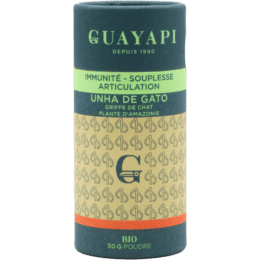

Immunité – Articulation. La Unha de Gato-Griffe du Chat soulage les gênes articulaires et contribue au système immunitaire. A associer au Camu Camu et au Tecoma pour bénéficier du meilleur des plantes.
Origine : Amazonie Brésilienne. Produit de Jardins-Forêts (FGP), label Sateré Mawé
Partie utilisée : écorce interne de la tige ou des racines.
Conseils d’utilisation : 1 à 2 cc de poudre par jour, à diluer dans une boisson, 3 minutes après les repas. Déconseillée aux enfants de moins de 3 mois, femmes enceintes / allaitantes, dans les situations post-opératoires et en cas de maladie auto-immune.
Fiche commerciale de l’Unha de Gato : https://www.guayapi.com/wp-content/uploads/2025/07/fiche-commerciale-unha-de-gato-guayapi-maj-2022.pdf
Article de Wikiphyto, l’Encyclopédie participative de phytothérapie (santé par les plantes) sur la Griffe du Chat / Unha de Gato : https://www.wikiphyto.org/wiki/Griffe_de_chat
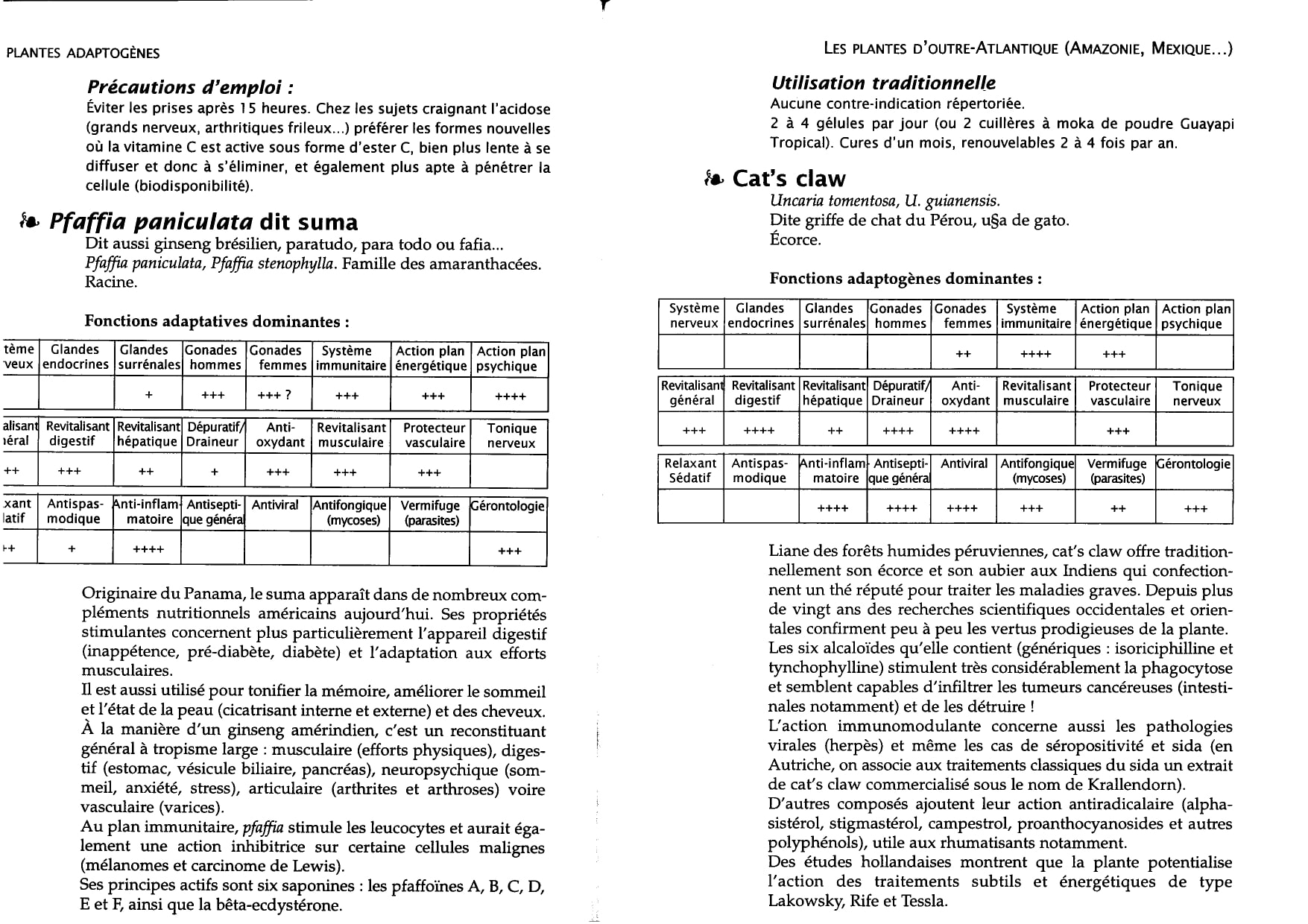
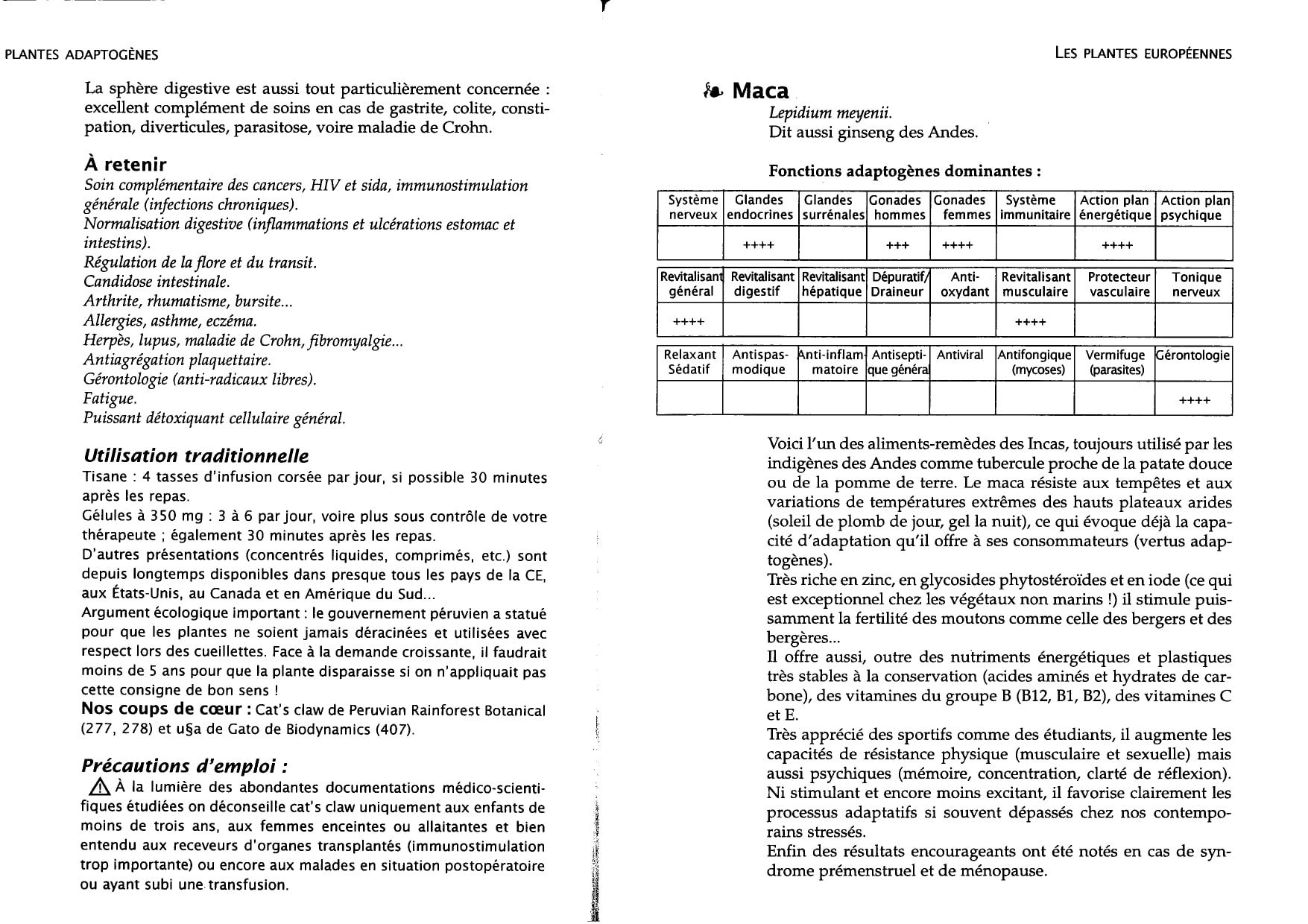
La recommandation de l’Encyclopédie de Revitalisation Naturelle de Daniel Kieffer
Quelques études scientifiques sur les bienfaits de la Unha de Gato
Aguilar, José L., et al. « Anti-inflammatory activity of two different extracts of Uncaria tomentosa (Rubiaceae). » Journal of Ethnopharmacology 81.2 (2002): 271-276.
Aquino, Rita, et al. « Plant metabolites. New compounds and anti-inflammatory activity of Uncaria tomentosa. » Journal of Natural Products 54.2 (1991): 453-459.
Batiha, Gaber El-Saber, et al. « Uncaria tomentosa (Willd. ex Schult.) DC.: A review on chemical constituents and biological activities. » Applied Sciences 10.8 (2020): 2668.
Keplinger, Klaus, et al. « Uncaria tomentosa (Willd.) DC.—ethnomedicinal use and new pharmacological, toxicological and botanical results. » Journal of ethnopharmacology 64.1 (1998): 23-34.
Oubaid, Enass Najem, Ahmed Rahmah Abu-Raghif, and Israa Mahdi Al-Sudani. « Phytochemical screening and antioxidant activity of Uncaria tomentosa extract: In vitro and in vivo studies. » Medical Journal of Babylon 20.1 (2023): 136-142.
Pilarski, Radosław, et al. « Antioxidant activity of ethanolic and aqueous extracts of Uncaria tomentosa (Willd.) DC. » Journal of ethnopharmacology 104.1-2 (2006): 18-23.
Sandoval, M., et al. « Anti-inflammatory and antioxidant activities of cat’s claw (Uncaria tomentosa and Uncaria guianensis) are independent of their alkaloid content. » Phytomedicine 9.4 (2002): 325-337.